Shared capabilities for manufacturing decisions and records
Flowmatic combines analysis capabilities and workflow modules. The target workflow determines site-specific configuration and the required connections.
CURRENT · Internal validation
Plan approval and execution criteria after a volume change
Compare alternatives against revised volumes and due dates. A responsible reviewer approves the selected plan before it is applied to work orders and resource reservations. LOT and quality records retain the applied plan and its evidence.
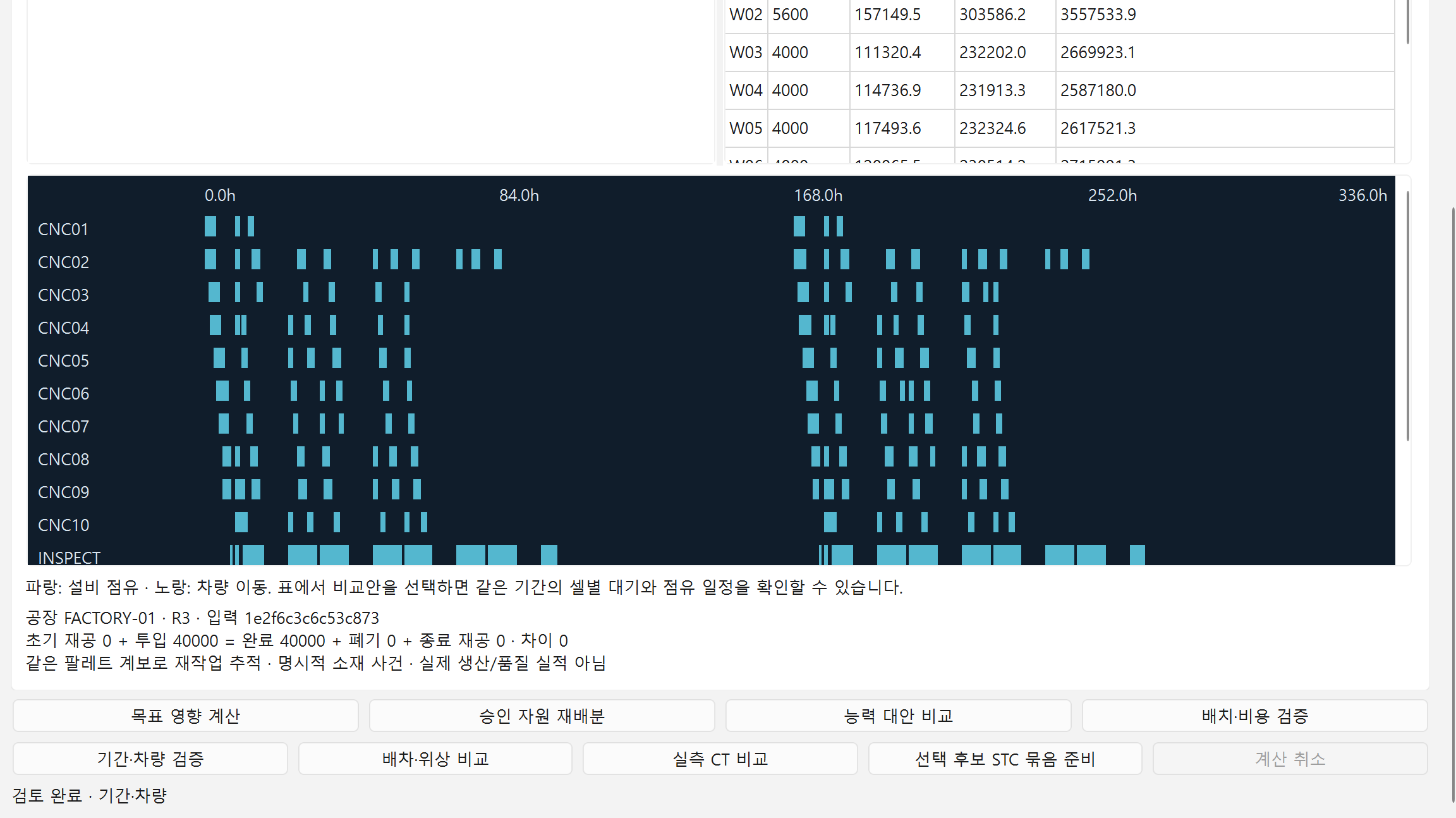
Compare alternativesReview volume, due dates, equipment and logistics together
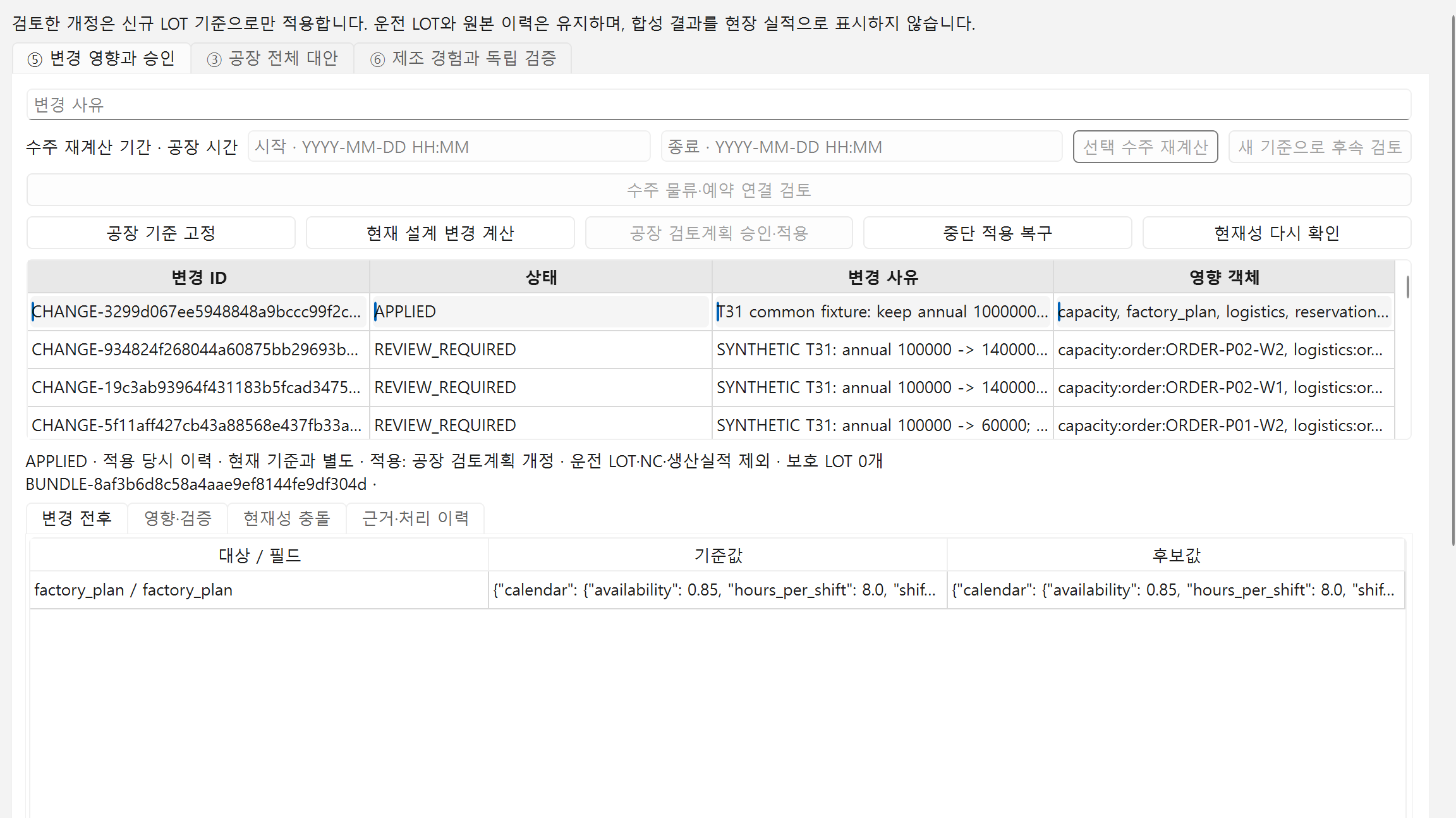
Approve the planApply the selected plan to work orders and resource reservations
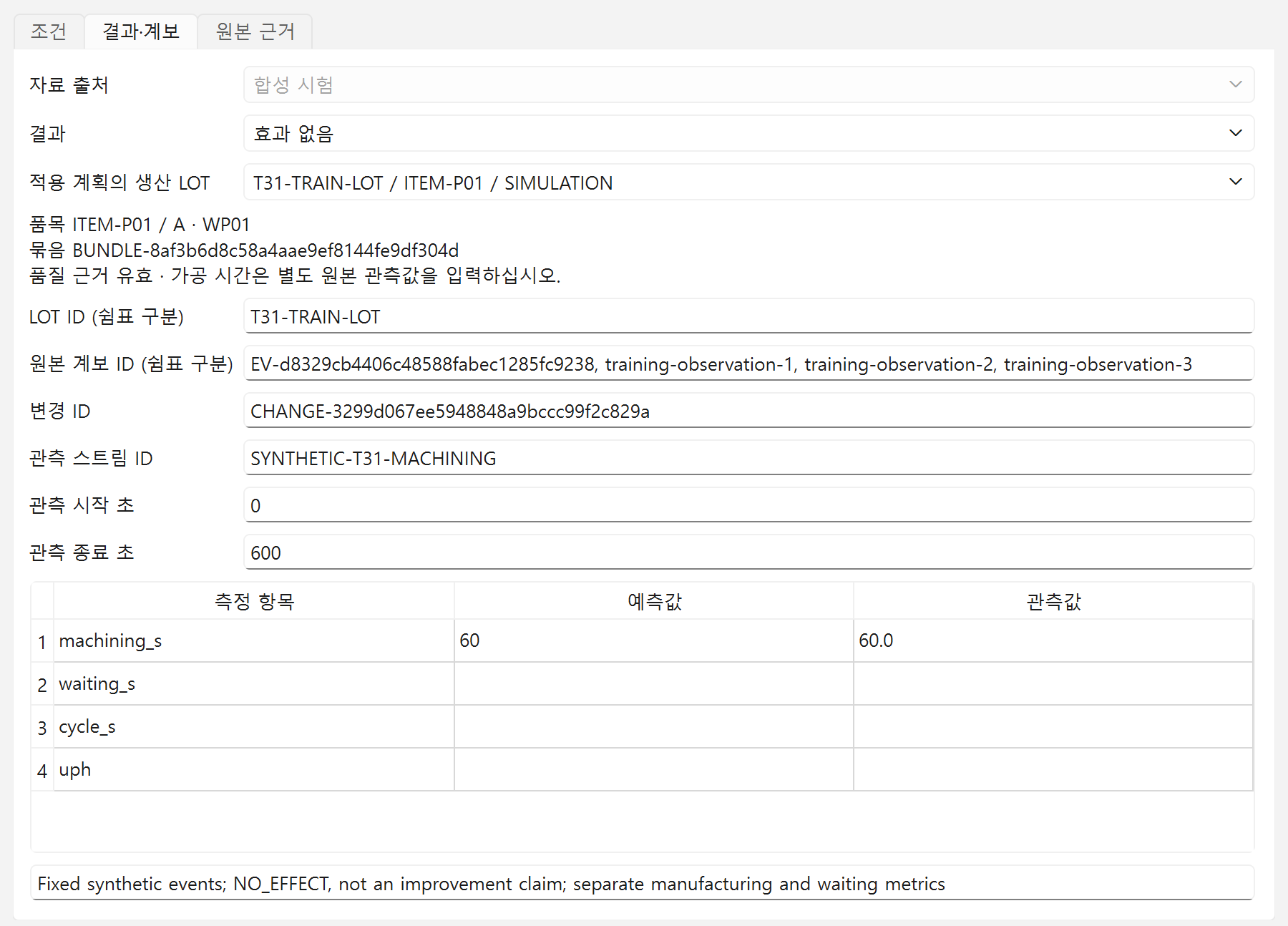
Review the evidenceLink LOT and quality records and check the permitted reuse scope
Equipment and logistics schedule for the selected plan reviewed under revised conditions.Record of a factory review plan applied after reviewer approval.Applied plan and synthetic-test evidence retained in LOT and quality records.
Synthetic data verifies software links, records and reuse conditions. This is not evidence of customer productivity gains or control of physical equipment.
Screens and the PDF are actual outputs from the Korean-language product.
Flowmatic
Shared capabilities across manufacturing workflows
Flowmatic combines analysis capabilities and workflow modules. The target workflow determines site-specific configuration and the required connections.
From a first workflow to recurring use and further sites.
Reuse common capabilities, connectors and deployment procedures. Configure each customer’s equipment, products and standards separately. Customers do not have to assemble the modules themselves.
01
First workflow
A paid deployment for one workflow on one line
02
Related work and adjacent lines
Extend the use of shared standards and history
03
Further sites and customers
Reuse the product while measuring actual deployment and support effort
The model combines deployment fees, recurring usage fees and additional implementation as scope expands. Repeat-deployment economics require field validation.
Information, decisions and outcomes across workflows
Review information and analysis a person needs to review a task. Record what informed the decision and what happened next, so the next person can use it.
01
Review information
Organize drawings, NC, video and inspection records for review.
02
Human judgment and responsibility
The responsible person reviews the evidence and decides the next action.
03
Outcome and change history
Retain the outcome and the reason for a change for the next task.
Use the same foundation for a different field request.
Example: regroup similar products and reorganize an existing machining line
01
Product-family candidates
Reuse machining analysis and work standards / add fixture and equipment compatibility rules
02
Layout comparison
Reuse material routing and dispatch / add drawing conversion and spatial constraints
03
Relocation and restart plan
Reuse quality, worklists and history / add calendar, resource and approval rules
An application concept identifying reusable capabilities and additional development—not a turnkey product for automatic safety approval or immediate restart.